In short
- One Ottawa firm's published figures: $250–$500 for a whole-house unit on its service page, $400–$800 for a basic installed unit in its 2026 guide.
- CSA sorts surge protective devices into Type 1 and Type 2, wired in at the service or panel, and Type 3, the plug-in kind.
- Hydro Ottawa suggests a whole-home unit on the panel and says lightning damage is usually ineligible for its compensation.
Typical prices in Ottawa
| Job | Typical range | Notes |
|---|---|---|
| Whole-house surge protector, average Ottawa house | $250–$500 | One Ottawa firm’s service page, undated; about two hours |
| Basic unit (40–80 kA), installed | $400–$800 | Same firm’s guide, January 2026 |
| Premium unit (80–140 kA), installed | $600–$1,200 | Same firm’s guide |
| Extra ground rods and bonding | +$200–$500 | Same firm’s guide, only if the ground falls short |
| Electrician hourly rate, Ottawa | $80–$130 | HomeStars, mid-size cities such as Ottawa |
| ESA notification, minimum fee | $92 | ESA 2026 residential fees |
Sources. One Ottawa firm’s published figures: Whole House Surge Protection Ottawa, Complete 2026 Guide, published 13.01.2026, seen 29.10.2026, and Residential Surge Protection, undated, seen 29.10.2026. Hourly rates: HomeStars, Electrician Hourly Rate, Canada-wide, updated 21.08.2026, seen 29.10.2026. ESA fee: 2026 Residential Fees, Quick Reference Guide, seen 29.10.2026. Notification: ESA, Notifications and inspections, ESA Bulletin 2-3-19 and ESA, Finding the right contractor, seen 29.10.2026. Device types: CSA C22.2 No. 269 package, seen 29.10.2026. Utility: Hydro Ottawa, Submit a claim, Power quality and Derecho: Our biggest storm yet, seen 29.10.2026. After a surge: ESA, Power Surges and Damaged Electrical Equipment, ESA Flash 25-05-FL and ESA guideline for installations exposed to water, seen 29.10.2026. Contracts: Ontario, guide for home renovation businesses, seen 29.10.2026.
Three types, three places in the house
A whole-home surge protector is a small device wired in at the panel or the service entrance. It limits voltage spikes before they reach the furnace, the fridge and the rest of the circuits. CSA sorts surge protective devices into three types:
- Type 1. Permanently connected between the service transformer and the line side of the main breaker; it may also go on the load side.
- Type 2. Permanently connected on the load side of the main breaker, so it works from the panel.
- Type 3. Cord-connected and plug-in units: the power bar behind the TV.
Hydro Ottawa notes that electronics left plugged in stay exposed even when switched off. The panel unit is the part that needs an electrician.
Breaker space and the ground wire
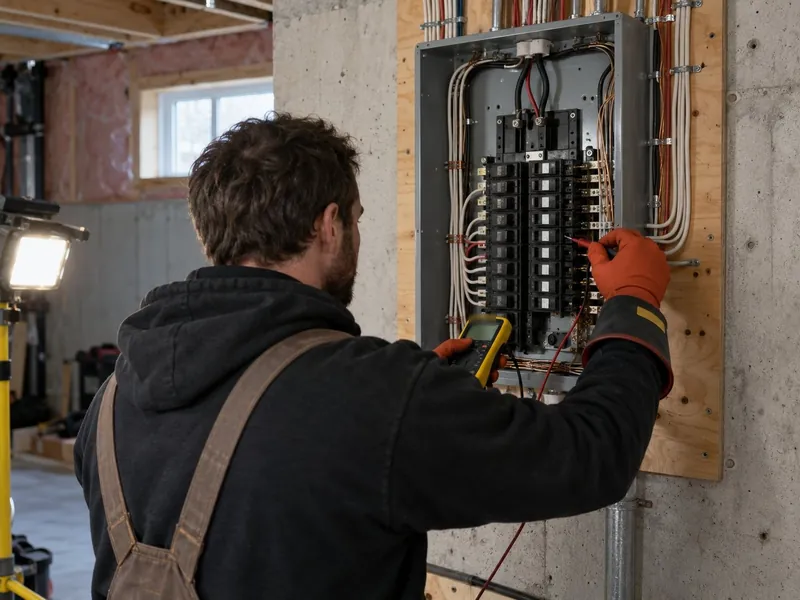
A Type 2 unit goes in the panel, so the first question is free space. One Ottawa firm’s guide says a full panel may need breakers consolidated or a subpanel, and that finished basements and tight closets add labour.
The device sends a surge to ground, so the ground connection matters; the same guide prices extra rods and bonding at $200–$500. Outlets without a ground raise a second point. ESA’s flash notice says plug-in protectors for computers and entertainment equipment cannot work without a ground reference, and a GFCI outlet gives none. See GFCI and AFCI protection.
Ottawa storms and the claims rule
Hydro Ottawa calls the May 2022 derecho its most damaging storm, worse than the 1998 ice storm and the 2018 tornadoes, with more than 400 poles damaged and 180,000 customers out. It says overhead lines were common in subdivisions built before its 2000 amalgamation; newer subdivisions get underground equipment.
Its power quality page lists lightning, large motors switching, overloaded circuits and poor wiring as triggers. Its claims page says weather and voltage-change damage is usually ineligible for compensation, so ask your insurer what the policy says about surge. A torn mast after a storm is separate work: see storm damage.
What moves the price
The Ottawa firm’s service page says $250–$500 and about two hours for an average house; its 2026 guide runs from $400–$800 for a basic unit to $1,000–$2,000+ for advanced systems. The spread comes from:
- The device. Basic 40–80 kA units at $200–$400 before labour, premium 80–140 kA units at $400–$700.
- Labour. $200–$400 standard, $400–$600 when the panel is hard to reach or needs changes.
- Timing. Added during a panel upgrade, the guide says it costs $100–$200 less.
- Rate. HomeStars puts the first hour of a call at $100–$200 Canada-wide.
Notification, mark and licence
ESA wants a notification filed before almost any electrical work starts; the minimum fee in 2026 is $92. Bulletin 2-3-19 also requires approved equipment, so ask which certification mark the unit carries. By law, anyone you hire for electrical work in your home must be a Licensed Electrical Contractor, with a 7-digit ECRA/ESA licence number on vehicles, cards and estimates.
What the quote should list
- Make, model, type and surge current rating
- Where it mounts, and the breaker or the plan for a full panel
- Grounding work as its own line, only if needed
- The ESA fee, the licence number, labour and HST
Ontario’s guide for renovation businesses requires a written agreement over $50; a bill can exceed the estimate by 10% at most without a signed change, and a contract signed at home has a 10-day cooling-off period.
After a surge
ESA says a surge can damage GFCIs, AFCIs and hard-wired smoke and CO alarms, and a visual check alone cannot tell whether they still work. List which of these tripped or went quiet, the date, and whether lightning or an outage came first. If a generator ran the house through the outage, say how it was connected.
Who you are dealing with
Ottawa Electric Desk hands your request to one independent local electrical contracting company. That company calls you back, prices the surge protector and installs it.
Questions to ask the company
- Is the unit Type 1 or Type 2, where will it mount, and which certification mark does it carry?
- Does it need its own breaker, and what is the plan if my panel is full?
- Will you check the grounding and list any upgrade as a separate line?
- What is your ECRA/ESA licence number, and is the ESA fee on the estimate?
- How does the unit show it is still protecting, and what does the maker's warranty cover?
Have this ready for the call
- A photo of the open panel with the breaker labels and any empty spaces in view
- A photo of the meter, showing whether the line arrives overhead or underground
- The equipment you most want covered: furnace, heat pump, sump pump, home office
- Any recent surge: the date, the weather, what stopped working
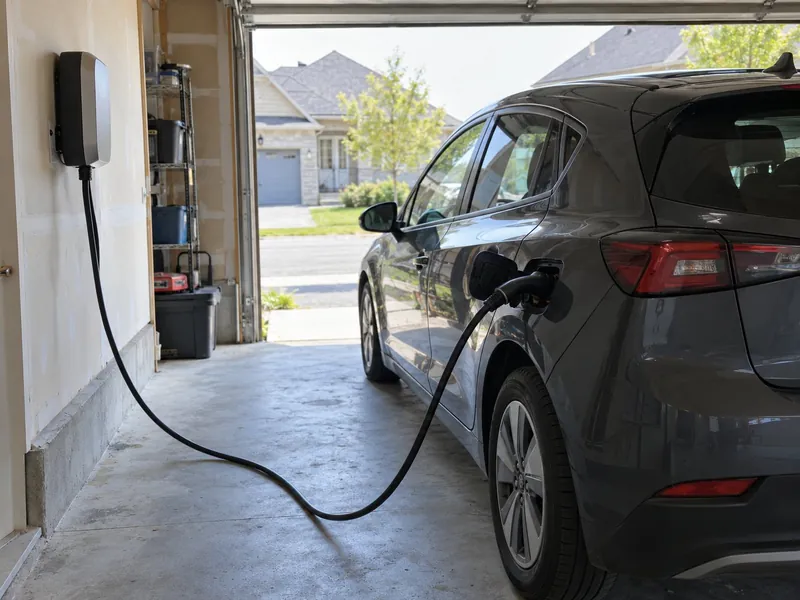
- Other planned work: panel upgrade, generator, EV charger
Questions people ask
Does a panel unit replace the power bars?
Hydro Ottawa’s advice keeps both: surge protectors for TVs and computers, and a whole-home unit on the panel. In CSA’s scheme the power bar is the Type 3 layer at the outlet.
Will Hydro Ottawa pay for a fridge lost in a storm surge?
Its claims page lists severe weather, lightning included, and voltage changes among causes usually ineligible for compensation, and points customers to their home insurer.
Does adding a surge protector need an ESA notification?
ESA’s Bulletin 2-3-19 says all new installations need one, and its exemption for replacing equipment excludes work in a panelboard. Ask the company to confirm it files the notification.
The basement flooded and water reached the panel. Is the surge protector still good?
ESA’s guideline for equipment exposed to water says surge protective devices that were sprayed or submerged must be replaced, along with breakers, GFCIs and AFCIs. Put the flood in your request.
Is it cheaper to add one during a panel upgrade?
One Ottawa firm’s guide says combining the two saves $100–$200, since the electrician is already in the panel.