In short
- Level 2 installation: $800–$2,000 on HomeStars' Canada-wide 2026 guide, set by the cable run and panel capacity.
- ESA's 2026 fee for one EV charger filed alone: $92, the notification minimum.
- A 200 A panel upgrade, if needed, adds $1,500–$4,500.
- The Better Homes Ottawa Loan lists Level 2 chargers: a 20-year term at 4.33% fixed, $10,000 minimum.
Typical prices in Ottawa
| Job | Typical range | Notes |
|---|---|---|
| Level 2 charger installation | $800–$2,000 | Canada-wide 2026 guide; 240 V, 30–50 A circuit |
| Level 2 charger unit | $500–$2,000 | Canada-wide; smart connectivity raises the price |
| Extra wiring for a long run | $300–$1,000 | Canada-wide |
| 240 V outlet for a plug-in charger | $250–$800 | Canada-wide |
| Trenching to a detached garage | $1,000–$5,000 | Canada-wide |
| 200 A panel upgrade | $1,500–$4,500 | Canada-wide, permit included |
| ESA notification, one EV charger | $92 | ESA 2026 fee guide; +$30 per extra charger |
Sources. Installation, outlet, panel and labour: HomeStars, Electrician Hourly Rate in Canada: 2026 Guide, published 30.06.2026, seen 29.10.2026. Unit, hook-up, wiring, trench, permit range and total: HomeStars, How Much Does a Charging Station Cost?, Canada-wide, seen 29.10.2026. Service and meter base: HomeStars, Upgrading an Electrical Panel Cost, seen 29.10.2026. ESA fees: ESA, 2026 Residential Fees Quick Reference Guide, rates as of 1 April 2026, seen 29.10.2026; ESA, Identifying an unlicensed electrical contractor, seen 29.10.2026. Utility: Hydro Ottawa, Electric vehicles and Hydro Ottawa, Electrical service requests, seen 29.10.2026. Loan: Better Homes Ottawa Loan Program, seen 29.10.2026. Electricity prices: Ontario Energy Board, Electricity rates, prices for 1 November 2026, seen 29.10.2026. Condos: Condominium Authority of Ontario, EV Charging Systems, seen 29.10.2026. Contracts: Ontario, guide for home renovation businesses, seen 29.10.2026. HomeStars figures are national ranges; the company that calls you quotes its own price.
Two price guides, one job
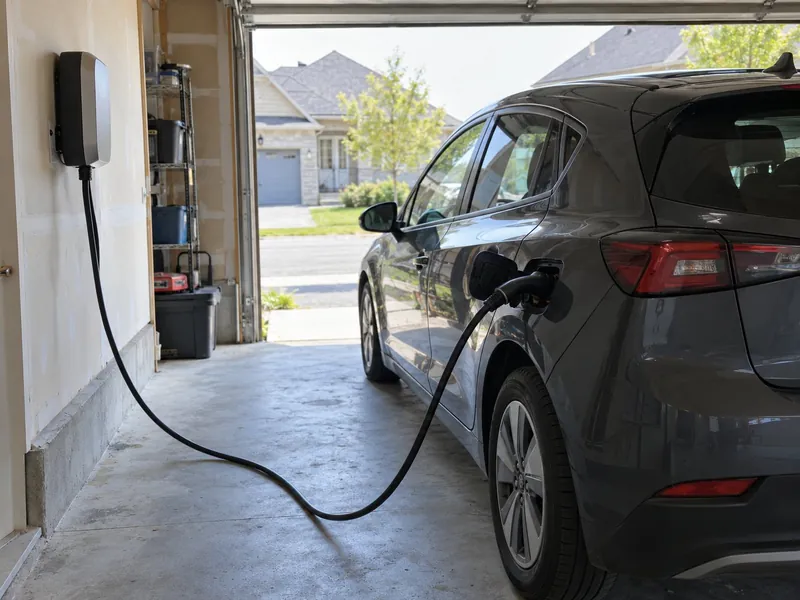
HomeStars prices a home charger in two Canada-wide guides. The charging station guide splits it into the unit at $500–$2,000, the electrical hook-up at $250–$650 and extra wiring at $300–$1,000, and puts a complete home station at $2,000–$7,500. The electrician guide gives one line for Level 2 installation at $800–$2,000 and $250–$800 for a 240 V outlet a plug-in unit can use.
The two slice the same job differently, so adding every figure counts some work twice. The one number tied to Ottawa is labour, at $80–$130 an hour.
Where your house lands in the range
The electrician guide ties the $800–$2,000 installation to the distance from the panel and spare panel capacity. Three common layouts:
- Attached garage, panel on the shared wall. A short run, which keeps distance from adding to the installation line.
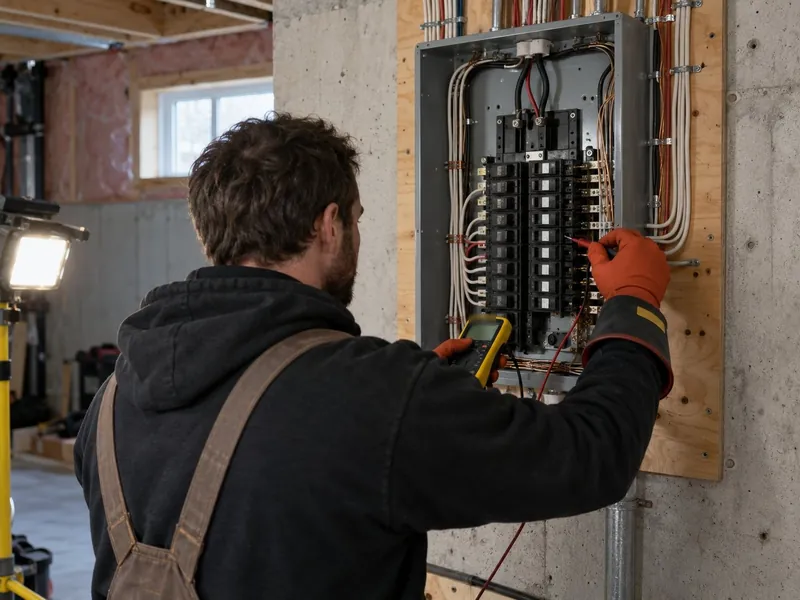
- Panel at the far end of a finished basement. HomeStars puts additional wiring for long distances at $300–$1,000, and difficult access at a $50–$200 premium on the hourly rate.
- Detached garage or a post by the driveway. The cable goes underground; trenching runs $1,000–$5,000.
Any of the three can also need panel work. The unit sits on top: HomeStars gives $500–$2,000, with features such as smart connectivity raising the price.
ESA’s fee, in dollars
HomeStars quotes permit fees of $50–$500 across Canada; ESA publishes the Ontario figure. ESA’s 2026 residential fee guide, with rates from 1 April 2026, lists an EV charger or EV outlet at $86 on a contractor’s notification and $30 for each additional charger. Every notification has a $92 minimum, so one charger filed by itself comes to $92. A bi-directional charger is listed at $172, on a line it shares with energy storage systems.
ESA lists an estimate without ESA fees among the signs of an unlicensed contractor, so expect the fee as its own line.
When the panel and Hydro Ottawa join the bill
When the house cannot carry the charger, the job grows. HomeStars gives $1,500–$4,500 for a 200 A panel upgrade with permit, $3,000–$5,000 for a full service upgrade with meter, wiring and panel, and $500–$1,500 for a meter base or mast.
If the installation changes the home’s electrical service, Hydro Ottawa’s EV page says the contractor must submit an Electrical Service Request before work begins, and the request page asks for it three to four weeks before the project starts. Hydro Ottawa replies with a customer layout listing the work and estimated costs. One layout per property per rolling 12 months is free.
The Better Homes Ottawa Loan also lists associated load management equipment as eligible. Service sizes are compared in the 100 A vs 200 A guide, and full panel figures are in panel upgrade cost in Ottawa.
Paying with the Better Homes Ottawa loan
Hydro Ottawa’s EV page lists no charger rebate on 29.10.2026. The City’s Better Homes Ottawa Loan names Level 2 chargers and the load management equipment around them as eligible. Its terms:
- 20-year term at 4.33% fixed, repaid through the property tax bill under Special Charges;
- $10,000 minimum; maximum the lesser of $125,000 or 10% of the assessed value;
- a 4% administrative charge added to the loan;
- only costs incurred after the Notice to Proceed count; up to 50% of the estimate can be requested in advance for deposits.
A charger alone sits under the $10,000 floor, so the loan fits when it joins larger eligible work, such as insulation or a heat pump.
Condos and townhouse corporations: who pays
Under the Condominium Authority of Ontario’s guide, an owner who applies generally pays the installation unless the written agreement says otherwise. When the corporation installs chargers itself, the cost is a common expense paid through condo fees, and owners vote if it tops 10% of the annual budgeted common expenses. Application steps: EV charger page.
What the written price should break out
Ontario requires a written agreement for home renovation work over $50. For a charger, ask for:
- the charger with its model, or a note that you supply it;
- the circuit: breaker, wire size, route and length;
- extra wiring, conduit or trench, each priced;
- panel or service work on a separate line;
- the ESA fee and any Hydro Ottawa layout charges;
- the total with HST.
Ontario’s guide for renovation businesses recommends deposits of at most 10% of the total. The final bill can exceed the estimate by 10% at most unless you sign a change, and a contract signed at home carries a 10-day cooling-off period.
Who takes your request
Ottawa Electric Desk takes the details you send and passes them to one independent Ottawa electrical contracting company. That company calls you, looks at the panel and the parking spot, prices the charger job and installs it.
Questions people ask
What does a home charger cost in Ottawa, all in?
HomeStars puts a complete home charging station in Canada at $2,000–$7,500, counting the unit, labour and any electrical work. The installation alone runs $800–$2,000. Both guides are national, and your quote rests on the cable run, the panel and the unit you pick.
Is there a rebate for a home charger in Ottawa?
On 29.10.2026, Hydro Ottawa’s EV page offers advice on permits and rate plans and lists no charger rebate. The money on offer locally is the City’s Better Homes Ottawa Loan, which is repaid with interest.
Can the Better Homes Ottawa Loan cover a charger by itself?
The loan has a $10,000 minimum and starts with a pre-retrofit EnerGuide assessment; you must complete at least one upgrade recommended in the resulting Renovation Upgrade Report. A charger at the published installation range falls below that floor, so the loan needs larger eligible work alongside it. Costs incurred before the Notice to Proceed are excluded.
How much is the ESA permit for a charger?
ESA’s 2026 residential guide lists an EV charger or EV outlet at $86 on a contractor’s notification, plus $30 for each additional one. A notification has a $92 minimum, so one charger filed alone comes to $92. A bi-directional charger is listed at $172, on a line it shares with energy storage systems.
What will charging add to the bill?
On the Ontario Energy Board’s prices for 1 November 2026, 100 kWh costs $3.70 at the Ultra-Low Overnight rate of 3.7¢, $9.10 at the Time-of-Use off-peak rate of 9.1¢ and $11.20 at the first-tier rate of 11.2¢. Those figures cover the Electricity line; delivery is set and billed separately.